

t means? In most texting and online chats, RLS stands for “Real Life Stuff” — a quick way to explain stepping away without going into detail. It’s casual slang, and it’s different from RLS in medical contexts, which means Restless Legs Syndrome. Here’s a quick breakdown of what it means and how to use it.
Quick Answer
RLS in text means “Real Life Stuff” or “Real Life Situation.” People use it to explain a sudden pause, delay, or exit from a conversation, game, or online chat because something in the offline world needs their attention. RLS is casual internet slang, most common on platforms like Discord, Instagram, Snapchat, and group texts, and it rarely needs further explanation once it’s used.
Outside of texting, RLS also has a medical meaning — Restless Legs Syndrome, a neurological sleep disorder — and a few technical or professional meanings depending on the field. Context almost always makes the intended meaning clear.
What Does RLS Mean in Text?
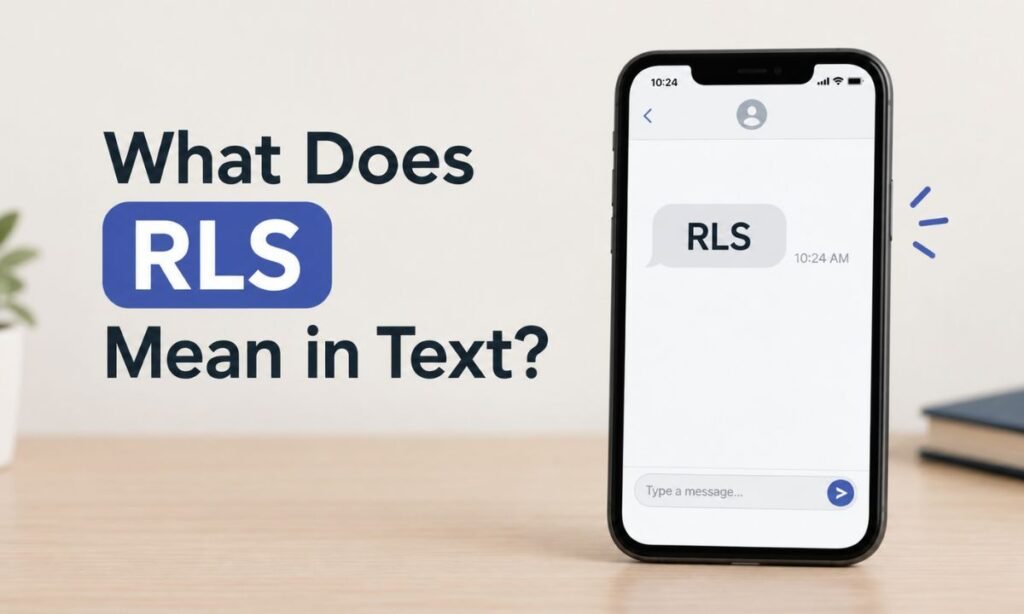
In everyday texting and chat apps, RLS stands for “Real Life Stuff.” It’s a shorthand people use when they need to step away from a digital conversation to deal with something happening offline — a phone call, a family matter, a work task, or simply life getting in the way.
For example, if someone is mid-conversation and suddenly writes “gtg, rls,” they’re saying they have to go because something in their real life needs attention right now, and they don’t have time (or the need) to explain further.
This meaning developed naturally from texting and gaming culture, where short acronyms save time and keep conversations moving. RLS fits into that same family as AFK (away from keyboard) and BRB (be right back), but with a slightly heavier, more personal undertone.
What Does “Real Life Stuff” Mean in Simple Words
“Real Life Stuff” simply refers to responsibilities, events, or situations happening outside of texting, gaming, or social media. It’s a catch-all phrase — not a specific event.
“Real Life Stuff” is an intentionally vague term used to describe anything from chores and errands to emotional or personal matters that pull someone away from their phone or screen.
Because it’s vague on purpose, RLS gives the sender privacy. They don’t have to explain whether it’s a doctor’s appointment, a family argument, or just needing a break — the listener is expected to accept the explanation without asking for details.
Why People Use “RLS” in Texting
People reach for RLS instead of a longer explanation for a few practical reasons:
- Speed — typing three letters is faster than typing a full sentence.
- Privacy — it avoids revealing personal details about what’s actually happening.
- Social norm — in gaming and chat communities, it’s an accepted, low-effort way to exit a conversation politely.
- Reduces pressure to explain — the other person usually won’t push for more information once RLS is used.
RLS works as a polite, low-friction way to pause a conversation without needing to justify the interruption. It signals respect for the conversation while prioritizing something more urgent.
Is “RLS” Formal or Informal? Usage Explained
RLS is strictly informal slang. It belongs in texting, DMs, group chats, gaming voice/text chats, and casual social media captions or comments.
| Setting | Is RLS Appropriate? |
| Texting friends | Yes |
| Gaming chats (Discord, Twitch) | Yes |
| Social media captions/comments | Yes |
| Group chats | Yes |
| Work emails | No |
| Professional messaging (Slack, Teams) | No |
| Academic writing | No |
| Formal letters or documents | No |
RLS should never be used in professional or academic writing, since it is understood almost exclusively as internet slang and can confuse readers unfamiliar with casual texting culture.
How to Use “RLS” Correctly in Sentences
RLS typically appears as a short standalone reason, often paired with other texting abbreviations. Some natural ways to use it:
- “Sorry, rls came up, ttyl.”
- “Can’t talk rn, rls 😅”
- “Brb, some rls just happened.”
- “Missed your message, dealing with rls.”
It’s almost never used mid-sentence as a noun with grammar around it (like “the RLS was hard today”). Instead, it functions more like an interjection or a quick tag at the end of a message.
RLS Meaning Relationship
In the context of relationships and dating conversations, RLS still means “Real Life Stuff,” but it often carries emotional weight. Partners may use it when:
- They need space after an argument.
- Work, family, or health issues are affecting their availability.
- They want to signal they’re not ignoring the other person on purpose.
In relationship texting, RLS commonly softens an absence or delayed reply by implying “it’s not about you, life just got busy.” It’s frequently used to prevent misunderstandings when someone goes quiet for a while.
RLS Meaning in Text From a Guy
When a guy sends RLS, it usually functions as a quick, no-drama explanation for going quiet or ending a conversation. Men often use RLS in a straightforward, low-detail way — it’s less about emotional nuance and more about efficiently signaling “something came up.”
From a guy, RLS in text typically means he’s dealing with something outside the conversation and isn’t trying to be distant or dismissive.
Common examples:
- “hey rls, talk later”
- “sorry been dealing with rls all week”
RLS Meaning in Text From Girl
When used by a girl, RLS carries the same core meaning — Real Life Stuff — but is sometimes paired with more context or emotional framing, especially in close friendships or relationships.
When a girl uses RLS in text, it usually means she’s momentarily overwhelmed by offline responsibilities or personal matters and needs a short pause from the conversation.
Examples:
- “ugh so much rls rn, ily talk soon”
- “sorry for the late reply, rls has been a lot”
In both cases, gender doesn’t change the definition — it only slightly affects tone and how much explanation typically accompanies the acronym.
Also Read This : What Does TMP Mean in a Text? A Simple Guide
Common Situations Where People Use “RLS”
RLS shows up most often in these everyday scenarios:
- Leaving a group chat abruptly
- Pausing a multiplayer game session
- Explaining a delayed reply to a text
- Stepping away during a video call or voice chat
- Signing off social media comments or live streams
- Managing family, school, or work obligations mid-conversation
RLS is most commonly used to explain sudden unavailability in real-time digital spaces like gaming sessions, livestreams, and group chats.
Real-Life Examples of “RLS” in Conversations
| Scenario | Example Text |
| Gaming session | “gotta dip, rls came up, gg” |
| Group chat | “sorry i went silent, rls all day” |
| Texting a partner | “can’t talk tonight, dealing with rls” |
| Social media comment | “been mia bc of rls, back now” |
| Discord server | “afk for a bit, rls” |
These examples show RLS functioning as a quick exit line rather than a detailed explanation — the format stays consistent across platforms.
When You Should Avoid Using “RLS”
RLS isn’t always the right choice, even in casual contexts. Avoid it when:
- The other person deserves a clearer explanation (serious situations, emergencies).
- You’re speaking with someone unfamiliar with texting slang, such as older relatives.
- The conversation is professional, academic, or formal in nature.
- Vagueness could come across as dismissive or evasive, especially in sensitive relationship conversations.
RLS should be avoided in situations that require empathy, clarity, or accountability, since its vagueness can unintentionally feel dismissive.
Common Mistakes People Make with “RLS”
- Overusing it to avoid replying, which can seem evasive over time.
- Using it in formal settings where the recipient may not understand the abbreviation.
- Confusing it with Restless Legs Syndrome, especially in health-related conversations.
- Assuming everyone knows the term — older generations or non-native slang users may not recognize it.
A common mistake is using RLS repeatedly without ever following up, which can make responses feel inconsistent or avoidant rather than genuinely busy.
Similar Slang Terms Like “RLS” in Texting
Several other acronyms serve a similar “stepping away” function in texting and online chats:
- AFK – Away From Keyboard
- BRB – Be Right Back
- GTG – Got To Go
- TTYL – Talk To You Later
- IRL – In Real Life
RLS differs from these terms because it implies a reason tied to real-world obligations, while AFK, BRB, and GTG simply indicate a temporary absence without specifying why.
RLS vs AFK vs BRB: Key Differences Explained
| Term | Meaning | Implies a Reason? | Typical Duration |
| RLS | Real Life Stuff | Yes (vague reason) | Minutes to hours |
| AFK | Away From Keyboard | No | Short (seconds to minutes) |
| BRB | Be Right Back | No | Very short |
| GTG | Got To Go | Sometimes | Ends conversation |
AFK simply means someone has stepped away physically, while RLS specifically signals that an offline responsibility or situation is the cause of the absence.
How People Use “RLS” on Social Media
On platforms like Instagram, TikTok, and X (formerly Twitter), RLS is often used in captions, comments, or stories to explain a period of inactivity.
Typical examples include:
- “Been off the grid, rls got busy”
- “Sorry for ghosting, rls hit hard this month”
- “Back after some rls, missed you guys”
On social media, RLS is frequently used to explain a posting gap or temporary inactivity without revealing personal details to a wider audience.
RLS for Beginners: Simple Explanation
If you’re new to texting slang, here’s the simplest way to understand RLS:
- R = Real
- L = Life
- S = Stuff (or Situation)
RLS is a three-letter way of saying “something in my actual life needs my attention right now.” You’ll usually see it near the end of a message, right before someone goes quiet or logs off.
If you ever see RLS and aren’t sure of the context, check whether the conversation is casual (likely “Real Life Stuff”) or medical/health-related (possibly Restless Legs Syndrome).
Why Understanding “RLS” Improves Communication
Knowing what RLS means helps prevent unnecessary confusion, especially in fast-moving digital conversations. It allows you to:
- Respond appropriately without asking for unneeded details.
- Avoid misreading a pause as someone ignoring you.
- Communicate more efficiently in gaming, texting, and social platforms.
- Recognize when the term is being used medically instead of casually.
Understanding RLS improves digital communication by helping people correctly interpret sudden absences instead of assuming disinterest or rudeness.
Frequently Asked Questions
What does RLS mean in a text message?
RLS in a text message means “Real Life Stuff,” used to explain a pause or exit from a conversation due to offline responsibilities.
Is RLS always about Restless Legs Syndrome?
No, RLS most commonly refers to “Real Life Stuff” in texting and only refers to Restless Legs Syndrome in medical or health-related contexts.
Can RLS be used in professional messages?
No, RLS is informal slang and should be avoided in professional or formal communication.
What’s the difference between RLS and AFK?
RLS implies a reason tied to real-world obligations, while AFK simply means someone has stepped away without specifying why.
Does RLS mean the same thing from a guy or girl?
Yes, the core meaning stays the same for anyone; only the tone or amount of added context tends to vary.
Conclusion
RLS is a simple but useful piece of texting slang that stands for “Real Life Stuff” or “Real Life Situation.” It’s commonly used across texting, gaming, and social media to explain a sudden pause or absence without going into detail. While it fits naturally into casual conversations, relationships, and online communities, it’s best avoided in professional settings or situations that call for a clearer explanation. Understanding both its casual and medical meanings ensures you can interpret RLS correctly no matter where you encounter it.

Aiden Ross is the creator of this website, where he shares simple and clear meanings of text, phrases, and modern slang. His goal is to help people quickly understand everyday language used in messages, social media, and conversations.