

You helped a friend, sent the info they asked for, and received… nothing. Then later, someone else acknowledges you, and you type back “YWA.” But did that land the way you meant it to?
YWA meaning in text is one of those abbreviations that looks harmless on the surface but carries surprising emotional weight depending on how — and when — you use it. Three letters, plenty of layers. This guide breaks down exactly what YWA means, how tone completely changes its message, when it’s appropriate, and when it can quietly damage a conversation without you even realizing it.
Whether you spotted it in a Snapchat reply, a group chat, or a TikTok comment, here’s everything you need to know to use YWA fluently and wisely in 2026.
What Does YWA Mean in Text?
YWA stands for “You’re Welcome Anyway.”
It’s a short, casual abbreviation used in texting and social media to respond to thanks — especially when the help you offered wasn’t fully used, acknowledged, or effective. Think of it as a polite reply with just a hint of self-awareness baked in. The “anyway” is the key word: it quietly says “I helped, whether or not you noticed.”
In some circles, YWA also appears with two alternate meanings:
| Meaning | Context | Tone |
| You’re Welcome Anyway | Casual texting, DMs, group chats | Neutral to slightly pointed |
| You’re Welcome Always | Warm replies to close friends | Generous and friendly |
| Young, Wild, and Ambitious | Instagram/TikTok captions | Motivational, energetic |
The dominant meaning in everyday digital communication — and the one this article focuses on — is firmly “You’re Welcome Anyway.” Context almost always makes it clear which version someone means.
How Tone Changes the Meaning of YWA
This is where YWA gets genuinely interesting. The phrase sits right on the line between gracious and passive-aggressive, and it can tip either way based on tiny details: punctuation, emojis, and the conversation that came before it.
Here’s how the same three letters can carry completely different messages:
- “YWA” — Warm, light, no hard feelings. Just a casual acknowledgment.
- “YWA” — Funny and self-aware. You’re laughing about it together.
- “YWA” — Teasing, playful, slightly cheeky. Good for close friends.
- “YWA” — Sarcastic. You’re mildly annoyed and not hiding it.
- “YWA.” (no emoji, period) — Cold. Can read as resentful or passive-aggressive.
- “YWA lol” — Casual and easy. The “lol” defuses any potential edge.
The bottom line: emojis are YWA’s tone guide. Without them, the phrase lives in ambiguous territory — especially in text, where voice and facial expression don’t exist to soften the message.
When Should You Use YWA?
YWA works well in low-stakes, casual situations where you want to acknowledge an exchange without making it a big deal. Some genuinely good moments to use it:
- You recommended a restaurant, they went somewhere else, and later mentioned your suggestion was good anyway.
- You stayed up helping a friend with a problem that resolved on its own before they could use your advice.
- You answered someone’s question, but it wasn’t quite what they were looking for.
- A group chat moved past your helpful message without reacting, and someone eventually circles back.
- A sibling or close friend skipped the thank-you and you want to nudge them — playfully, not pointedly.
When to avoid it:
- In serious or emotionally charged conversations
- When the other person is already apologetic or stressed
- In professional contexts — emails, Slack, work messages
- With people you’ve just met or don’t know well
- When there’s already tension in the exchange
The rule of thumb: if you’d feel awkward saying “You’re welcome anyway” out loud in that moment, don’t send the abbreviation either.
How Is YWA Used on Social Media?
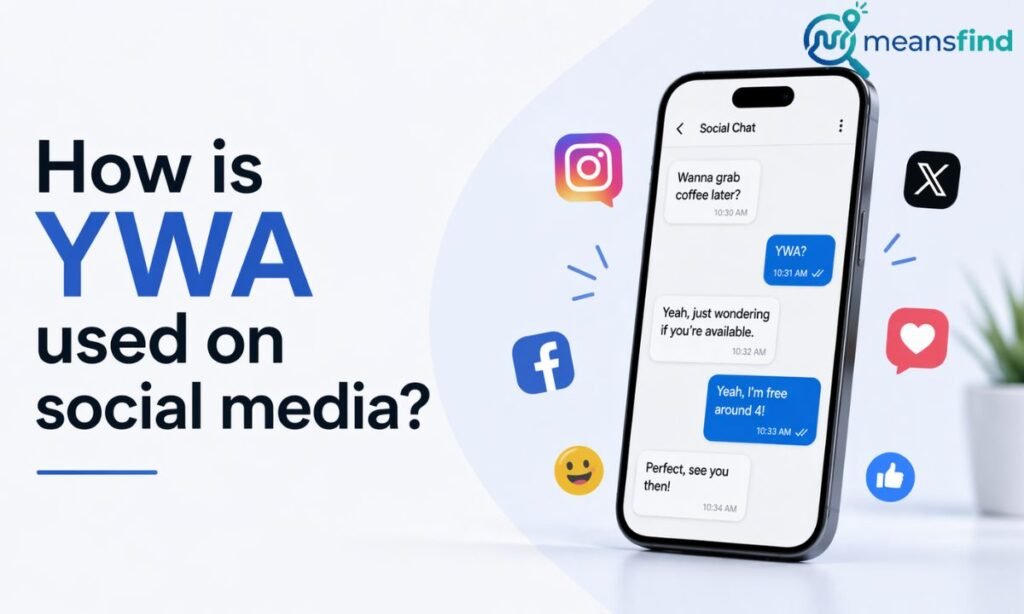
YWA shows up across platforms, but the energy it carries shifts depending on where it lands.
Instagram: Here, YWA often appears in comment replies or DMs when someone finally acknowledges a recommendation or tag. It’s usually low-key and confident — “You’re welcome, I knew you’d come around.” It can also appear in captions in the “Young, Wild, and Ambitious” sense, particularly in fitness, hustle culture, or lifestyle content.
TikTok: In fast-moving comment sections, YWA is typically quick and breezy — a witty callback to an earlier interaction. It rarely carries resentment here. The platform’s humor-forward culture tends to make it read as self-deprecating and funny rather than pointed.
Twitter/X: Used conversationally when advice or information was eventually acknowledged by someone who initially ignored it. The tone here can be slightly more wry and knowing — users on X tend to use it with a dry edge.
WhatsApp: In private chats and group messages, YWA carries more personal weight because the audience is smaller. Context matters a lot here. In a family group, it might be a light joke. Between close friends, it’s casual. In less familiar group chats, it can read poorly without an emoji.
YWA Meaning in Text From a Guy
When a guy sends YWA, it tends to be functional and literal. Most of the time, there’s no hidden emotional subtext — it’s a fast acknowledgment that he helped, the situation worked out (or didn’t), and life moves on.
What YWA from a guy typically means:
- “I helped, you eventually appreciated it, we’re good.”
- “You didn’t thank me, but no big deal.”
- “Moving on from this, no hard feelings.”
- In gaming or tech chats: “I gave you the info, do with it what you want.”
In group chats and Discord, guys frequently use YWA to keep the vibe casual after helping with a decision or troubleshooting something. It’s clean, quick, and usually not emotionally loaded. If he adds a 😂, he’s definitely not upset — he’s just waving it off.
YWA Meaning in Snap
On Snapchat, YWA is almost always on the lighter, more playful end of the spectrum. Because Snapchat is built for quick, informal exchanges — especially among teens and young adults — the phrase skews warmer there than it might in a private text message.
Common Snapchat YWA scenarios:
- After a failed recommendation: “Thanks for the directions, I got a little lost though!” → “YWA 😅 I tried!”
- Casual appreciation: “Thanks for the song rec!” → “YWA, it’s literally perfect for you.”
- Playful sarcasm in streaks: “Thanks for nothing 😂” → “YWA 😜 you love it.”
- Story replies: Responding to a thank-you story mention with YWA keeps it light and public-friendly.
On Snap specifically, if someone sends YWA with no emoji in a DM context, it’s worth paying a little attention to. Snapchat’s usual tone is casual and fun — a bare YWA can signal that something didn’t quite land right.
Also Read This:WTV Meaning in Text: What It Really Means in Chats, Social Media & Daily Conversations
What Does YWA Mean From a Girl?
When a girl sends YWA, the interpretation depends heavily on the existing dynamic and the context of the conversation. There’s a wider range of possible meanings compared to the typically more literal male usage.
Close friend: Almost always playful. She’s nudging you about the missed thank-you with zero real frustration. Add it to her humor, not a complaint.
Acquaintance or newer connection: Pay attention to the emoji — or the lack of one. A warm emoji means she’s keeping it light. No emoji in a serious conversation may mean she genuinely expected acknowledgment and didn’t quite get it.
Romantic context: In flirty or relationship dynamics, YWA can be a soft, low-key way of saying “notice me more.” It’s rarely aggressive — more like a gentle tap on the shoulder.
After a disagreement: This is where it gets nuanced. A YWA following tension means she wants to close the topic but hasn’t fully let it go. Respond with actual warmth, not a matching abbreviation.
Key insight: From a girl, YWA without any softening (no emoji, no lol, no exclamation mark) in anything beyond the most casual conversation deserves a thoughtful follow-up, not a shrug.
Where You’ll See YWA Most Often
YWA lives in casual digital spaces. Here’s where it shows up most frequently in 2026:
- iMessage and WhatsApp — Private chats between friends and family; most common platform overall
- Snapchat — Especially among Gen Z; usually warm and playful
- TikTok comments — Quick, humorous callback replies
- Instagram DMs and comments — Confidence and casual acknowledgment
- Discord — Gaming and interest-based servers; low-key and neutral
- Dating apps (Tinder, Bumble, Hinge) — Light flirting tool, keeps tone easygoing
Where you won’t (and shouldn’t) see it:
- Work emails and professional Slack channels
- Formal school communication
- LinkedIn messages
- Any conversation with someone who doesn’t know digital slang
Alternatives to YWA (Friendly, Casual & Professional Options)
Sometimes YWA isn’t the right fit — either the relationship is too new, the mood is too serious, or you simply want to communicate more clearly. Here are the best alternatives by situation:
| Situation | Better Alternative | Why It Works |
| Casual reply to thanks | “No worries! 😊” | Warm, zero ambiguity |
| Close friend missed the thank-you | “Uh, YW? 😂” | Humorous nudge without the edge |
| Genuine warmth | “Anytime! Always happy to help.” | Full, sincere, no sarcasm risk |
| Professional setting | “Happy to help.” / “My pleasure.” | Clean and appropriate |
| Someone feeling bad they forgot | “Don’t worry about it at all!” | Reassuring, closes it kindly |
| Playful reminder | “You’re welcome, by the way 😏” | Spelled out = less chance of misread |
The clearest comparison to make: YW vs. YWA. “YW” (You’re Welcome) is clean and friendly — no strings attached. YWA carries an implied “even though” that makes it subtly more loaded. In situations where any ambiguity could be damaging, “YW” or a full phrase is always the safer pick.
Why YWA Can Send the Wrong Message
YWA is deceptively risky for one simple reason: text strips out tone. When you say “You’re welcome anyway” out loud, your smile, your laugh, your eyebrow raise — all of that tells the listener exactly how to receive it. In a text, all of that disappears.
Common ways YWA backfires:
- Sending it in a tense conversation — Even if you mean it lightly, it reads as rubbing it in.
- No emoji with a stranger or acquaintance — Comes off as passive-aggressive when you meant to be casual.
- Using it repeatedly — Starts to sound like scorekeeping rather than friendly banter.
- Wrong platform — YWA in a work Slack is an instant professionalism red flag.
- Mismatched energy — If the other person is sincerely apologetic, a breezy YWA can feel dismissive of their effort.
The core issue is this: YWA is a phrase that lives in the gap between “I’m fine with it” and “I noticed you didn’t acknowledge me.” That gap is comfortable territory with close friends. With anyone else, it can collapse quickly.
How To Know if YWA Is Appropriate
Run through this quick mental checklist before you hit send:
- ✅ Is this a close friend, family member, or someone who knows your humor?
- ✅ Is the overall mood of the conversation light and casual?
- ✅ Are you on a casual platform (iMessage, Snapchat, WhatsApp)?
- ✅ Could you say “You’re welcome anyway” out loud to this person without it sounding off?
- ❌ Is this a professional or school-related chat?
- ❌ Has there been any tension or sensitivity in this conversation recently?
- ❌ Is the other person older or unfamiliar with digital slang?
- ❌ Are you genuinely annoyed — and using this to signal it indirectly?
If you’re hitting more ✅ than ❌, YWA is probably fine — especially with an emoji. If any ❌ applies, reach for a warmer, clearer alternative.
Examples of Better Replies in Common Situations
Here are real-life texting scenarios where YWA could be used — and a better alternative that works every time:
Scenario 1: You gave a friend directions and they figured it out on their own before following them.
- YWA version: “YWA 😅”
- Better version: “Ha! Glad you sorted it. I’m here if the next one stumps you 😄”
Scenario 2: You explained how to fix a tech issue and they solved it differently.
- YWA version: “YWA”
- Better version: “Nice! As long as it works 😊”
Scenario 3: Someone in a group chat thanked “everyone” vaguely without calling you out specifically.
- YWA version: “YWA lol”
- Better version: “Glad we figured it out together! 🙌”
Scenario 4: A friend took your restaurant recommendation — weeks later.
- YWA version: “YWA 😏”
- Better version: “Finally!! Was it worth the wait? 😄”
Scenario 5: Someone didn’t thank you at all, and the moment has passed.
- YWA version: “YWA 🙄” (risky)
- Better version: Let it go. Bringing it up later almost never lands well regardless of phrasing.
Frequently Asked Questions
What does YWA mean in text?
YWA means “You’re Welcome Anyway” — a casual slang reply used when your help was partially acknowledged or overlooked.
Is YWA rude?
Not by default, but tone and context decide everything — a warm emoji makes it friendly, while a bare YWA can easily read as passive-aggressive.
What’s the difference between YW and YWA?
YW (“You’re Welcome”) is a clean, neutral reply to thanks; YWA carries a subtle implication that the thanks may have been late, missing, or your help wasn’t fully used.
What does YWA mean on Snapchat?
On Snapchat it almost always means “You’re Welcome Anyway,” used in a light, casual way — often with an emoji to keep the tone warm and playful.
Can I use YWA professionally?
No — it’s too casual and carries tonal risk. Use “Happy to help” or “My pleasure” in professional settings.
What does YWA mean from a girl?
Usually playful and low-key, especially from a close friend. If it comes without any emoji during a tense moment, it may signal mild, unexpressed frustration.
What does YWA mean from a guy?
Typically literal and casual — he’s just quickly acknowledging that he helped. Rarely carries deeper emotional subtext.
Are there other meanings for YWA?
Yes — “You’re Welcome Always,” “Young, Wild, and Ambitious” (in motivational content), and “Yoga With Adriene” (the YouTube channel) — but “You’re Welcome Anyway” is by far the dominant texting meaning.
What are good alternatives to YWA?
“No worries 😊,” “Anytime!,” “Happy to help,” or simply “YW” — all communicate the same sentiment without the tonal risk.
Conclusion
YWA is a small abbreviation that earns its place in digital communication precisely because it lives in a very human space: the moment after you’ve helped someone, whether or not they fully noticed. At its best, it’s light, self-aware, and even a little charming. At its worst, it becomes a quiet passive-aggressive note that complicates an otherwise easy conversation.
The difference between those two outcomes comes down to three things: who you’re sending it to, what mood the conversation is already in, and whether you’ve added an emoji or not.
Used right, YWA in text is effortlessly modern and emotionally intelligent. Used wrong, it says more than you intended — and not in a good way. So read the room, match your tone, and when in doubt, a simple “No worries! 😊” will always land safely.

Aiden Ross is the creator of this website, where he shares simple and clear meanings of text, phrases, and modern slang. His goal is to help people quickly understand everyday language used in messages, social media, and conversations.


1 thought on “YWA Meaning in Text: What It Really Means and How To Use It Right in 2026”