

You’re scrolling through messages, and someone drops “ash” right in the middle of a sentence. No context. No explanation. Just… ash. Sound familiar? Whether you spotted it in a TikTok comment, a WhatsApp group chat, or an Instagram caption, “ash” is one of those modern slang terms that wears multiple faces depending on who’s using it and where.
The confusion is real — and completely understandable. “Ash” can be a casual intensifier, a person’s nickname, a symbolic expression, or a technical term in medicine and science. This guide cuts through all of it and gives you a clear, complete breakdown of everything “ash” means in today’s digital world.
What Does “Ash” Mean in Text? – Quick Definition
Ash is a versatile term in digital communication. Its most popular slang use is as a phonetic shortening of “as hell” — a slang intensifier that emphasizes how strongly something is felt or experienced.
Example: “I’m tired ash right now 😤” = “I’m tired as hell right now.”
Beyond slang, ash also appears as:
- A nickname for names like Ashley, Ashton, or Ashlyn
- A symbolic or emotional expression representing burnout, emptiness, or transformation
- A literal word referring to the powdery residue left after something burns
- A technical acronym in medicine, science, and advocacy fields
The meaning shifts completely based on tone, platform, and context — which is exactly why so many people Google it.
Background – Where Did “Ash” Come From?
The word “ash” has deep roots. In Old English, it referred to both the ash tree (Fraxinus) and the grey residue of combustion. Across religions and cultures, ashes carried symbolic weight — representing mourning, humility, renewal, and the passage of time. Think of the phrase “ashes to ashes,” or the religious tradition of Ash Wednesday.
The name “Ash” gained mainstream popularity in the 1980s and 1990s as a friendly short form of Ashley and Ashton — two names that peaked in that era. Pop culture pushed it further. Ash Ketchum, the iconic Pokémon trainer, made the name feel adventurous and relatable to an entire generation.
The slang evolution into “as hell” is more recent. Around 2020–2021, the phrase began appearing in TikTok captions and comment sections where typing speed rules everything. “As hell” became “ash” — shorter, punchier, and easier to drop into a sentence on a phone screen. Gen Z adopted it quickly, and it spread across Instagram, Snapchat, and Twitter (now X) from there.
“Ash” Usage in Different Contexts
The meaning of ash is never one-size-fits-all. Here’s how it breaks down across different settings:
Ash as a Slang Intensifier
This is the dominant modern usage. “Ash” functions exactly like AF (as f**k), hella, or very — it amplifies the word before it. Think of it as an emotional volume knob.
| Sentence with “Ash” | What It Means |
| “That test was hard ash 😤” | That test was extremely hard |
| “She’s funny ash 😂” | She is hilarious |
| “I’m happy ash rn!” | I’m incredibly happy right now |
| “That fit is clean ash 🔥” | That outfit looks amazing |
It’s a phonetic abbreviation — meaning it’s based on how the phrase sounds, not how it’s spelled. This is the same pattern that gave us slang like “prolly” (probably) and “def” (definitely).
Ash as a Name or Nickname
When capitalized — Ash — it’s almost always a person’s name or username. It’s a clean, punchy nickname used for Ashley, Ashton, Ashlyn, and even Asher. On social media platforms, “Ash” works well as a username because it’s short, memorable, and carries a subtle edge.
Context clue: If someone says “Thanks, Ash” or “Ash said she’d be there,” they’re talking about a person — not using slang.
Ash in Symbolic or Emotional Expression
“Ash” is also used metaphorically in digital conversations, especially in aesthetic content and emotional posts. Drawing from its literal meaning — what’s left after something burns — ash can represent:
- Emotional burnout: “I feel like ash lately” (drained, hollowed out)
- Loss and endings: “Everything we had turned to ash”
- Renewal and rebirth: The phoenix rising from ashes is a well-known symbol of transformation, and users pull on this imagery in healing-focused captions
This symbolic layer shows up frequently in poetry-style TikToks, Instagram captions, and aesthetic accounts where raw emotion meets short-form writing.
“Ash” Meaning in Chat, WhatsApp, Instagram, TikTok, and Snapchat
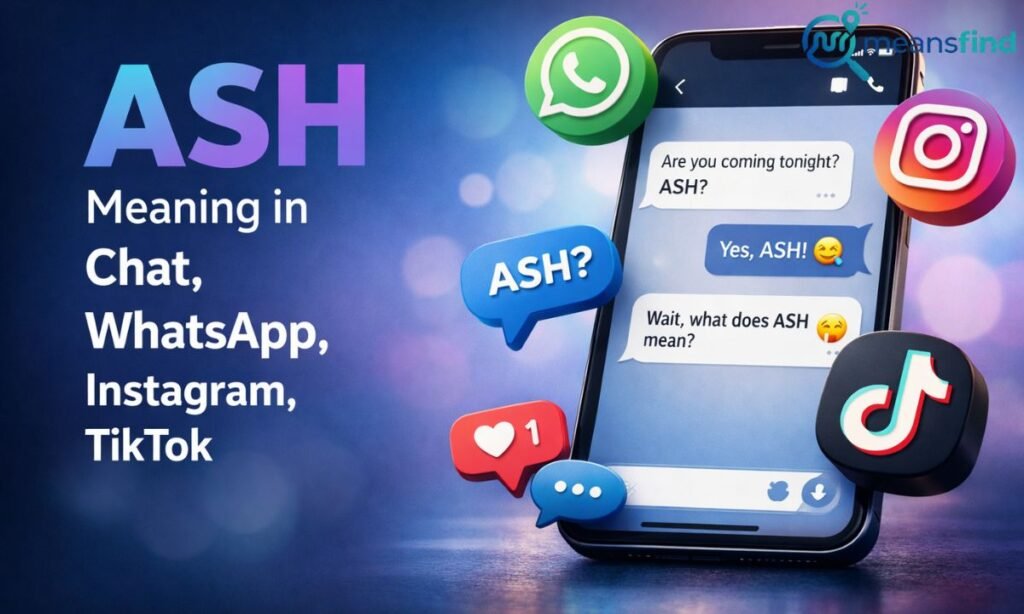
Every platform has its own conversational style, and “ash” adapts to each one:
WhatsApp: In private one-on-one or group chats, ash most commonly appears as a slang intensifier — “That movie was boring ash” — or as a casual nickname. Because WhatsApp conversations are often fast-paced and informal, the phonetic shorthand fits right in.
Instagram: Ash shows up in comments, captions, and DMs. A caption reading “This view is beautiful ash 🌅” uses it as emphasis. In DMs, it carries the same tone as in texting — expressive, casual, and relatable.
TikTok: This is where “ash” as slang arguably originated and thrives most. Comment sections are packed with it — “This is funny ash 💀” on a viral video is standard. It’s also used in caption text over videos to intensify reactions.
Snapchat: On Snap, ash pairs with visuals. A selfie caption saying “Feeling good ash today 🤍” is both expressive and on-brand for the platform’s casual, spontaneous style.
Twitter/X: Used in debates, reactions, and threads. “This argument is weak ash” or “That song is underrated ash” are typical formats — quick opinions with maximum punch.
“Ash” Meaning in Physics, Medical, and Science Terminology

“Ash” isn’t exclusive to texting culture. In professional and academic fields, it carries entirely different and precise definitions.
Ash in Science and Chemistry
In science, ash refers to the inorganic mineral residue that remains after a substance undergoes complete combustion. This definition appears in:
- Soil science: Wood ash contains calcium, potassium, and magnesium — making it a soil amendment
- Food science: “Ash content” measures the mineral content in food products
- Geology: Volcanic ash — fine particles ejected during eruptions — is studied for its atmospheric and environmental impact
- Industrial chemistry: Ash analysis is used in quality control for coal, biomass, and fuel products
ASH in Medicine
In clinical medicine, ASH is an established acronym for Alcoholic Steatohepatitis — a serious, inflammation-driven liver condition caused by chronic heavy alcohol consumption. It represents an advanced stage of alcohol-associated liver disease (ALD) and can progress to cirrhosis if untreated.
Medical professionals also use ASH as an abbreviation for Action on Smoking and Health, a public health advocacy organization focused on tobacco-related illness prevention.
Important: If you see ASH in a medical chart, clinical report, or healthcare conversation, it refers to liver disease — not internet slang. Context is critical.
Ash in Aviation and Environmental Monitoring
Volcanic ash is a major concern in aviation. Aviation authorities, including the FAA, monitor volcanic ash clouds closely because fine ash particles can damage aircraft engines and reduce visibility. “Ash advisories” are issued by meteorological agencies when volcanic events create flight hazards. This is a fully literal, technical use of the word with significant safety implications.
Common Misconceptions About “Ash” in Text
Several myths follow this term around. Here’s what people get wrong:
- “Ash is always slang.” Not true. Depending on the conversation, ash can be a name, a literal word, or a technical term. Always read the surrounding context first.
- “Ash is offensive or vulgar.” The slang version derives from “as hell,” which carries mild emphasis but isn’t considered a swear word. Ash itself is not offensive.
- “Ash only means sadness.” While the symbolic use leans toward emotional heaviness, ash also represents renewal and rebirth — the phoenix metaphor is just as valid as the burnout metaphor.
- “Ash and ashy mean the same thing.” They don’t. Ashy is a separate adjective used to describe pale, dry, or dull skin or surfaces — a completely different meaning with no overlap.
- “Ash is dying out.” As of 2026, ash remains actively used across Gen Z social media spaces. Slang shifts, but “ash” has embedded itself into phonetic online language in a lasting way.
Similar Terms and Alternatives to “Ash”
If “ash” feels unclear in your conversation, here are comparable expressions across different uses:
| “Ash” Meaning | Similar Alternatives |
| As Hell (intensifier) | AF, hella, so damn, mad, super |
| Nickname (Ashley/Ashton) | Ash, Ashe, Ley, Ton |
| Emotional burnout | Drained, depleted, burnt out, hollow |
| Symbolic transformation | Rising from ashes, rebirth, renewal |
| Medical (ASH) | Alcoholic hepatitis, ALD, liver inflammation |
How to Respond When Someone Says “Ash”
Your reply should match the context and energy of the message. Here’s a practical guide:
If it’s used as a slang intensifier: Match the casual tone. Keep it short and relatable.
Them: “That class was boring ash 😩” You: “Right?? I almost fell asleep 😭”
If it’s someone’s name: Respond naturally, just as you would with any name.
Them: “Ask Ash about the plans” You: “Sure, I’ll text Ash now.”
If it’s emotional/symbolic (“I feel like ash”): Take the tone seriously. A compassionate, supportive reply works best.
You: “That sounds really rough. Want to talk about it?”
If the meaning is genuinely unclear: It’s completely fine to ask. A quick “Wait, what do you mean by ash here?” prevents any awkward misreading and shows you’re actually engaged.
Differences Between “Ash” and Similar Words
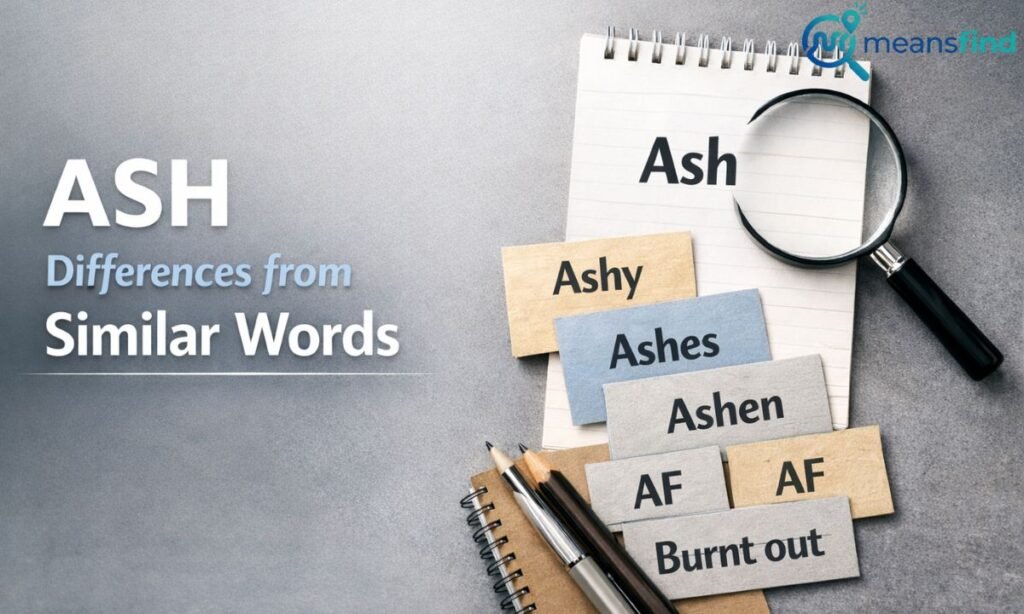
“Ash” often gets confused with related terms. Here’s how they differ:
| Term | Meaning | Key Difference |
| Ash | As hell (intensifier) or name | Multi-layered; slang + name + symbol |
| Ashy | Pale, dry, dull (skin or surface) | Descriptive adjective only |
| Ashes | Plural; remains after fire | Mostly literal or symbolic |
| Ashen | Pale grey (usually from shock/fear) | Emotional/physical descriptor |
| AF | As f**k | Stronger, more explicit intensifier |
| Hella | Very / extremely | Regional slang (common in US West) |
| Burnt out | Exhausted, emotionally depleted | Full phrase, not abbreviated |
The key takeaway: “ash” is the only word in this group that works as both a casual slang intensifier and a symbolic emotional expression and a proper name — making it uniquely context-dependent.
“Ash” in Online Conversations and Dating Apps
On dating apps like Tinder, Hinge, and Bumble, “ash” can show up in a few ways:
As a name: Many profiles feature “Ash” as a display name — short, approachable, and memorable. It’s a popular choice for users named Ashley or Ashton who want a name that reads as both friendly and slightly edgy.
As casual slang in early messages: Early flirty conversation is often fast, playful, and heavily abbreviated. “That photo is fire ash 🔥” or “I’m nervous ash tbh” fits the informal energy of early dating app chat.
As symbolic self-expression: Some users include “ash” imagery in their bios — rising from ashes, new beginnings, leaving the past behind — as a shorthand way to signal personal growth or resilience without writing a paragraph about it.
In online communities and group chats more broadly, “ash” continues to evolve. Gaming spaces use it to dramatize moments. Meme communities lean into its absurdist potential. Wellness accounts use the phoenix-and-ashes symbolism for motivational content. The word’s flexibility is exactly what keeps it relevant.
Frequently Asked Questions
What does “ash” mean in a text message?
Most commonly, it means “as hell” — used to intensify feelings — but can also be a nickname or symbolic expression depending on context.
Is “ash” offensive slang?
No, ash is not offensive. It’s informal and casual, but carries no inherently negative or vulgar meaning.
What does “ash” mean from a girl or guy in chat?
It’s usually “as hell” used as a compliment or emphasis — tone and surrounding words will confirm the intent.
What does ASH stand for in medicine?
ASH stands for Alcoholic Steatohepatitis, a serious liver condition caused by chronic heavy drinking.
Is “ash” the same as “ashy”?
No — “ashy” describes dry, pale, or dull skin and has no slang connection to “ash” in texting.
Can I use “ash” in professional communication?
No — it’s informal slang and should be kept to casual chats, social media, and personal messaging only.
What does ash mean on TikTok or Instagram?
On both platforms, ash typically means “as hell” — used to emphasize reactions, moods, or opinions in captions and comments.
Is ash still used in 2026?
Yes, ash remains a widely used slang term across WhatsApp, TikTok, Snapchat, and Instagram among Gen Z and millennial users.
Conclusion
“Ash” is a small word carrying a surprisingly large range of meaning. In casual texting and social media, it most often functions as a snappy, phonetic shorthand for “as hell” — a Gen Z-born slang intensifier that adds emotional punch to any sentence. But zoom out, and the same word becomes a name, a symbol of transformation, a scientific term, or a medical acronym.
The skill is always in the context. Read the platform, the tone, and the relationship — and “ash” will reveal exactly what it means. When it still doesn’t, there’s no shame in asking. Staying fluent in evolving digital language isn’t about memorizing every slang term — it’s about knowing how to read the room, one message at a time.

Aiden Ross is the creator of this website, where he shares simple and clear meanings of text, phrases, and modern slang. His goal is to help people quickly understand everyday language used in messages, social media, and conversations.


1 thought on “Understanding “Ash” Meaning in Text – What It Really Means and How to Use It”